logo
Good price  online

products details

Created with Pixso. Home Created with Pixso. Products Created with Pixso.
Ampoule Filling Machine
Created with Pixso. Pharmaceutical Glass Ampoule Filling Machine with Automatic Transfer Washing Filling and Sealing System

Pharmaceutical Glass Ampoule Filling Machine with Automatic Transfer Washing Filling and Sealing System

Brand Name: Lingyao
Model Number: LY-AF-20Z
MOQ: 1 set
Price: USD 47,000–142,000/set
Delivery Time: 30–45 days after deposit
Payment Terms: T/T,L/C,Western Union
Detail Information
Place of Origin:
Shanghai, China
Certification:
CE, GMP, ISO 9001
Glass Grades:
Type I Borosilicate, Type II, Type III
Filling Range:
1–20 Ml
Production Capacity:
8,000–12,000 Pcs/h
Filling Accuracy:
±0.5%
Transfer System:
Full-body Contour Star Wheels
Washing Method:
Glass-adaptive Ultrasonic + Jet Rinse
Sealing Method:
Thermal-profile Controlled Flame Sealing
Contact Materials:
Ceramic, PTFE, 316L Stainless
Air Pressure:
0.6–0.8 MPa
Power:
10.5 KW, 380V/50Hz
Dimensions:
4,600 × 2,000 × 1,800 Mm
Machine Weight:
2,500 Kg
Packaging Details:
Export wooden case with anti-rust film and foam inserts
Supply Ability:
10 sets per month
Highlight:

automatic ampoule filling machine

,

pharmaceutical glass ampoule sealer

,

ampoule washing filling sealing system

Product Description
Product Overview

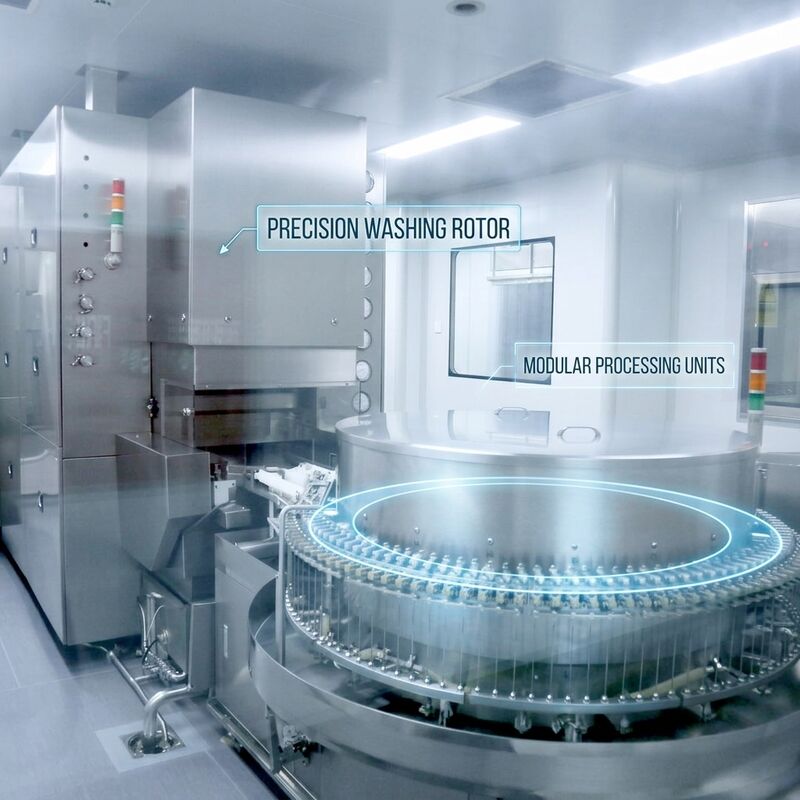
This pharmaceutical glass ampoule filling machine unifies automatic transfer, washing, filling and sealing into one system designed around the material properties of pharmaceutical glass. Borosilicate glass, the standard for injectables, combines high chemical resistance with specific mechanical behavior: it is strong under compression but fragile under point loads and thermal shock. Every station on this machine is engineered to respect those properties while maintaining pharmaceutical throughput.

Problem

Pharmaceutical glass failures cost producers in two ways: chemical failures, where the glass releases ions into the drug (visible as pH shift or particulate formation), and mechanical failures, where handling damage creates cracks that fail during sealing or leak testing. Both failure types are often traced back to the machine: inappropriate contact materials, excessive handling forces, or thermal profiles that shock the glass.

Cause

Chemical failures can be triggered by washing water that is too aggressive for the glass grade, or by contact with metal parts that deposit ions. Mechanical failures come from transfer systems that grip the glass at point contacts, and from sealing flames that heat the neck too quickly for the glass's thermal expansion coefficient. Standard machines rarely adjust for the specific glass grade in use.

Solution

This system matches machine parameters to the glass specification: the washing program selects water temperature and ultrasonic power appropriate for the glass grade (Type I borosilicate, Type II treated soda-lime, or Type III), the transfer star wheels use full-body support contours instead of point grips, and the sealing profile is tuned to the glass's thermal expansion coefficient with controlled heating and cooling rates. Glass-grade recipes are stored in the PLC and selected with the product recipe, giving documented, repeatable glass handling.

Key Features
  • Glass-grade adaptive programs: washing and sealing recipes matched to Type I/II/III glass
  • Full-body support transfer: contoured star wheel pockets prevent point-load damage
  • Controlled thermal profile: heating and cooling rates tuned to glass expansion coefficient
  • Ion-safe contact materials: ceramic and PTFE contact surfaces minimize ion migration
  • Gentle washing program: water temperature and ultrasonic power adapted per glass grade
  • Documented glass handling: glass-grade recipes recorded in the electronic batch record
Technical Specifications
ParameterSpecification
Glass GradesType I borosilicate, Type II, Type III
Filling Range1–20 ml
Production Capacity8,000–12,000 pcs/h
Filling Accuracy±0.5%
Transfer Systemfull-body contour star wheels
Washing Methodglass-adaptive ultrasonic + jet rinse
Sealing Methodthermal-profile controlled flame sealing
Contact Materialsceramic, PTFE, 316L stainless
Air Pressure0.6–0.8 MPa
Power10.5 kW, 380V/50Hz
Dimensions4,600 * 2,000 * 1,800 mm
Machine Weight2,500 kg
Applications

This machine serves pharmaceutical producers working with multiple glass grades, particularly those sourcing glass from different regions where Type II and Type III glass are common alternatives to borosilicate. It is also chosen for products with strict interaction studies, such as biologics and sensitive small molecules where glass ion release is a monitored quality attribute. The documented glass handling supports stability studies and regulatory submissions.

Plants supplying multiple markets use the glass-grade recipes to match local glass availability without changing machine settings or losing quality.

Selection Guide

Identify the glass grades in your supply chain first, and request the coefficient of thermal expansion data for each, because the sealing profiles are built from these values. Second, review your container interaction studies: if glass ion release is a critical parameter, specify the ion-safe contact material option. Third, check whether you will switch glass suppliers frequently, since the multi-recipe system is most valuable when glass sourcing varies. Finally, request a glass handling test at FAT using each of your actual glass grades.

FAQ

Q: How does the machine know which glass grade is being processed?

The glass grade is selected as part of the product recipe on the HMI, typically tied to the batch number. The recipe stores the washing program, sealing thermal profile and transfer parameters for that grade, so operators cannot accidentally run mismatched settings.

Q: Why does glass grade affect the sealing profile?

Different glass grades have different coefficients of thermal expansion, roughly 3.3 * 10⁻⁶/K for borosilicate but higher for soda-lime glass. Heating a higher-expansion glass with a borosilicate profile creates thermal stress and cracks; the adaptive profile controls heating and cooling rates to stay within the glass's stress limit.

Q: Can Type III soda-lime glass really meet injectable standards?

Type III glass is permitted for non-parenteral products and some parenteral applications with appropriate surface treatment. The machine's washing program for Type III includes a surface-conditioning rinse that reduces ion release, helping the glass meet the required pharmacopeia limits.

Q: What documentation supports container interaction studies?

We provide material certificates for all contact surfaces, the washing water parameters per glass grade, and the thermal profiles used, which can be referenced in your interaction study reports and regulatory dossiers.

Packaging & Quality Assurance

Every machine is test-run with water and dummy ampoules for 72 hours before packing, and a sealed calibration report is shipped with the unit. The machine is wrapped in anti-rust film and secured in an export-grade wooden case with foam inserts, suitable for sea or air freight. We supply CE, GMP and ISO 9001 documentation, a 12-month warranty on parts, and lifetime remote technical support. On-site installation, operator training and IQ/OQ/PQ validation assistance are available on request.